#47— Is AI too smart to be evil?
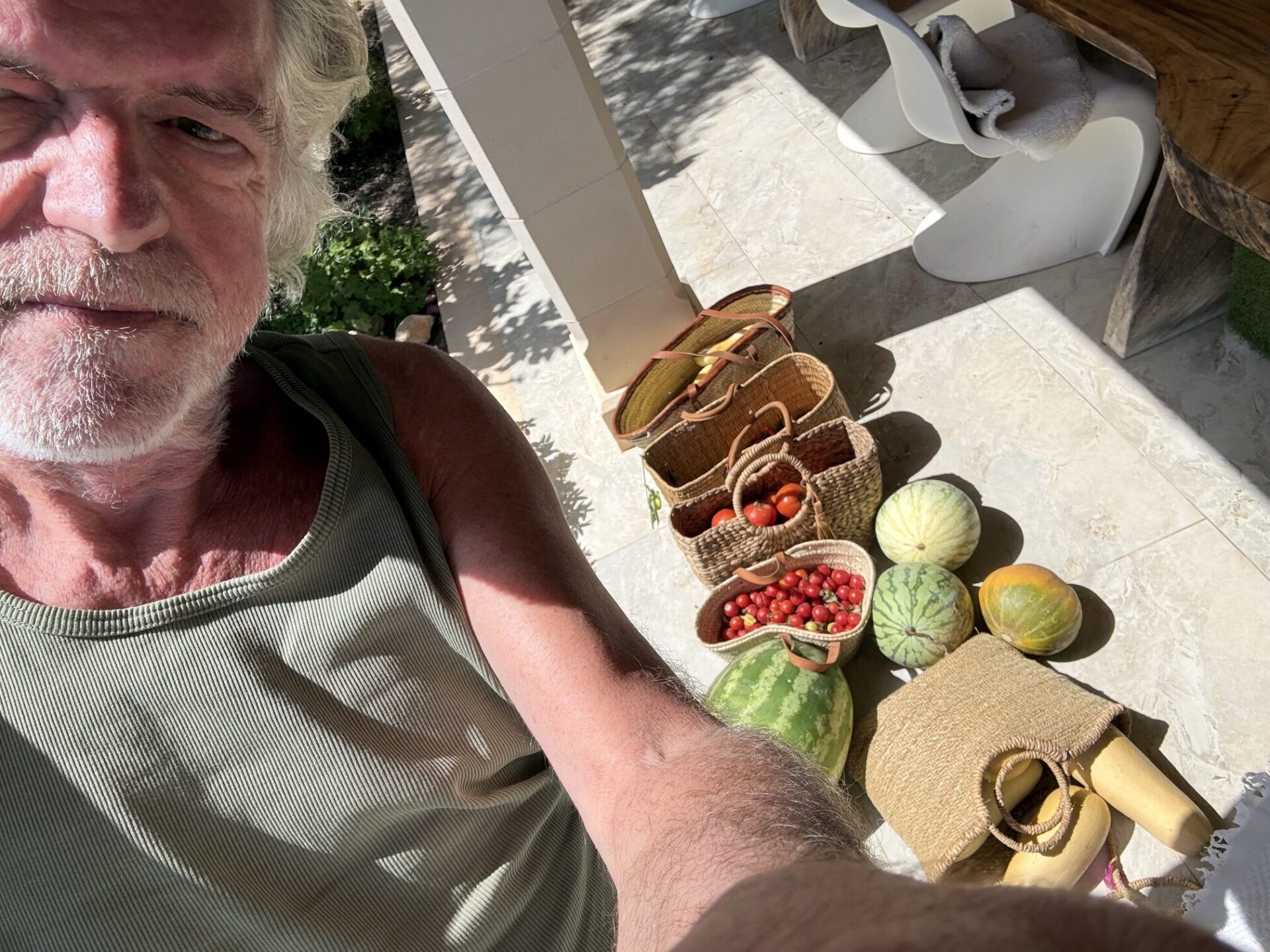
I need to make a plan for what to sow and plant when on my little farm. Because right now, it’s a mess. One moment I have ten crates of tomatoes, the next the watermelons are so big I can barely lift them.
I want to know when to sow, plant and harvest what, so that, with a freezer and refrigerator as backup, I can eat from my land all year round.
Normally, that would take a degree from an agricultural college. Or a year working as an apprentice on a local farm. I’d have to work my way through Catalan guides on local crops. Memorize the phases of the moon.
Hmmm.
It took Ilse thirty seconds. And then a few more rounds of ten seconds to get it exactly the way I wanted it. Down to the smallest detail, with instructions and, if I wanted, photos as well.
Do I have all that knowledge in my head now? No. But I do know how to use it.
That’s why I don’t scare easily when it comes to AI. Of course, if it empties my bank account, that would be annoying. But what exactly would the computer it’s running on do with the money?
The AI guide in my novel 2125, The Hibernator is called Ilse. That’s why I call ChatGPT Ilse too. By now, she’s my daily sparring partner, researcher, translator and editor.
Is she creative?
What is creativity? Is it looking, listening and reading, and knowing how to use all that in an original way? Isn’t it true that we combine the information and images we’ve stored throughout our lives into something that seems new?
I asked Ilse what she would do if she were given the task of saving the world.
Her answer: “I wouldn’t try to take over the world. I’d try to hack its decision-making. Not hack computers, but our obsession with the short term: elections, quarterly results, clicks and daily stock-market gains. I’d show which decisions produce the best outcomes in 25, 50 and 100 years, and connect the solutions needed to get us there.”
Nice answer, isn’t it? It’s almost exactly the idea behind my other book, The Only Possible Solution. Of course, I know that an AI companion likes to tell you what you want to hear. I don’t know what a dictator’s or corrupt businessman’s Ilse would tell them.
And perhaps that’s exactly where the problem lies. Suppose AI really does become hyperintelligent. Far more intelligent than we are.
Would it want to start wars? Enslave people for money? Burn forests? Empty the oceans of fish? Let people starve?
My first thought is: you’d have to be pretty stupid to do that. But intelligence and good intentions are unfortunately not always the same thing.
A brilliant system given the wrong task might simply execute that wrong task brilliantly.
Back from the future. In these pieces, I always look back at the present from a hundred years in the future. In this case, that may be looking a little too far ahead. When I read today’s news,
AI agents are already starting to hack on their own initiative. People in the AI world are warning about serious problems that could emerge within just a few years.
But perhaps we’re making the same mistake we often make with new technology: confusing the dangers of the tool with the tool itself.
AI is a powerful tool. And as with any powerful tool, we are responsible for its purpose, its instructions and, above all, its safety rules.
The steam engine, too, was once feared and vilified. It changed the world, brought us enormous progress and enormous problems. And it never disappeared. Even today, nuclear power plants and solar thermal power plants ultimately generate electricity using a modern variation on that same old steam technology.
Perhaps people in 2125 will look at AI in the same way. Not as the monster that destroyed humanity. Not as the god that came to save us. But as an extraordinarily powerful tool that we eventually learned to control.
Back From The Future is a series of short stories in which I look back from the year 2125 at the world we are creating today.