#50 – I wish i could look away
This is number fifty of this column
Fifty short pieces about the problems we face today, but also viewed from the future, a hundred years from now.
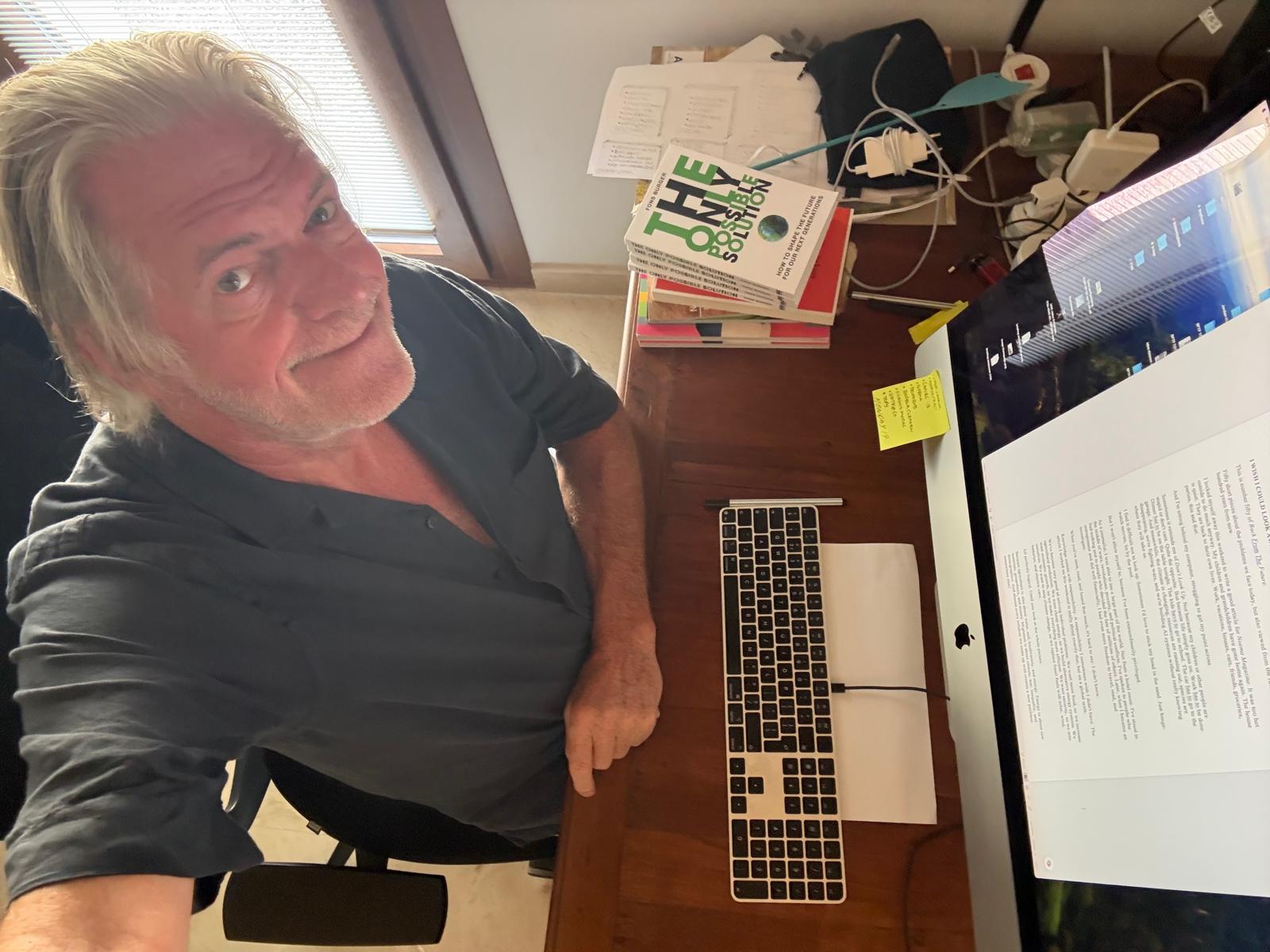
I locked myself away this weekend to write a good article for Noema Magazine. It was too hot outside to do much anyway. My children and grandchildren have gone home again. The house is quiet. They are back to their own lives. Work, vacations, houses, cars, friends, groceries, parties, this and that.
And I’m sitting behind my computer, struggling to get my point across.
Sometimes it reminds me of Don’t Look Up. Not because my children or other people are stupid or don’t care. Quite the opposite. But because life simply goes on. Work has to be done. Dinner has to be on the table tonight. The kids have to go to school. The car has to go to the garage. And meanwhile, the climate is changing, resources are running out, species are disappearing, we’re fighting wars, and we’re building AI systems without really knowing where they will take us.
I find it difficult not to look up. Sometimes I’d love to stick my head in the sand. Just binge-watch movies, lie by the pool.
But I won’t allow myself to, because I’ve been extraordinarily privileged.
As a journalist, I was able to see a large part of the world. Not from a hotel room. I’ve stood in the middle of wars, revolutions, poverty, and political conflicts. I’ve spoken to people who had nothing and to people who decided the fate of millions of others. Later, when I became an entrepreneur and did well financially, I had even more freedom to travel, read, and investigate.
When you’ve seen, read, and heard that much, it’s hard to say: I didn’t know.
Knowledge comes with responsibility. A responsibility I sometimes wish I didn’t have. The article I worked on this weekend is really about exactly that, but on a global scale.
We’ve become very good at solving individual problems. We want more food, so we increase agricultural production. We want cheap energy, so we build alternative energy systems. We want economic growth, so we make everything more efficient. We want security, so we arm ourselves. We want to stop climate change, so we replace fossil fuels with solar, wind, batteries, and electric cars.
All perfectly logical. Until you look at the whole picture.
Because agriculture is also about water, soil, biodiversity, and energy. Energy is about raw materials, geopolitics, and money. Migration is about climate, war, inequality, and demographics. And almost every solution we come up with creates a new problem somewhere else.
We’re trying to solve a systemic crisis as if it were a collection of separate problems.
From 2125, that will probably look rather strange. Not because the people then were smarter than we are. But because eventually they had no choice but to see the whole picture.
Not some fantastic new invention. Not AI. Not nuclear fusion. Not a new political leader. Those aren’t the solutions. There came a point when we stopped trying to solve one problem at a time.
I hope my grandson will still be alive then.
And that one day he finds number fifty of this series and thinks:
Christ, Grandpa. You worried too much.
Back From The Future is a series of short stories in which I look back from the year 2125 at the world we are creating today.