#75 – THE END OF THE FINANCIAL MARKET
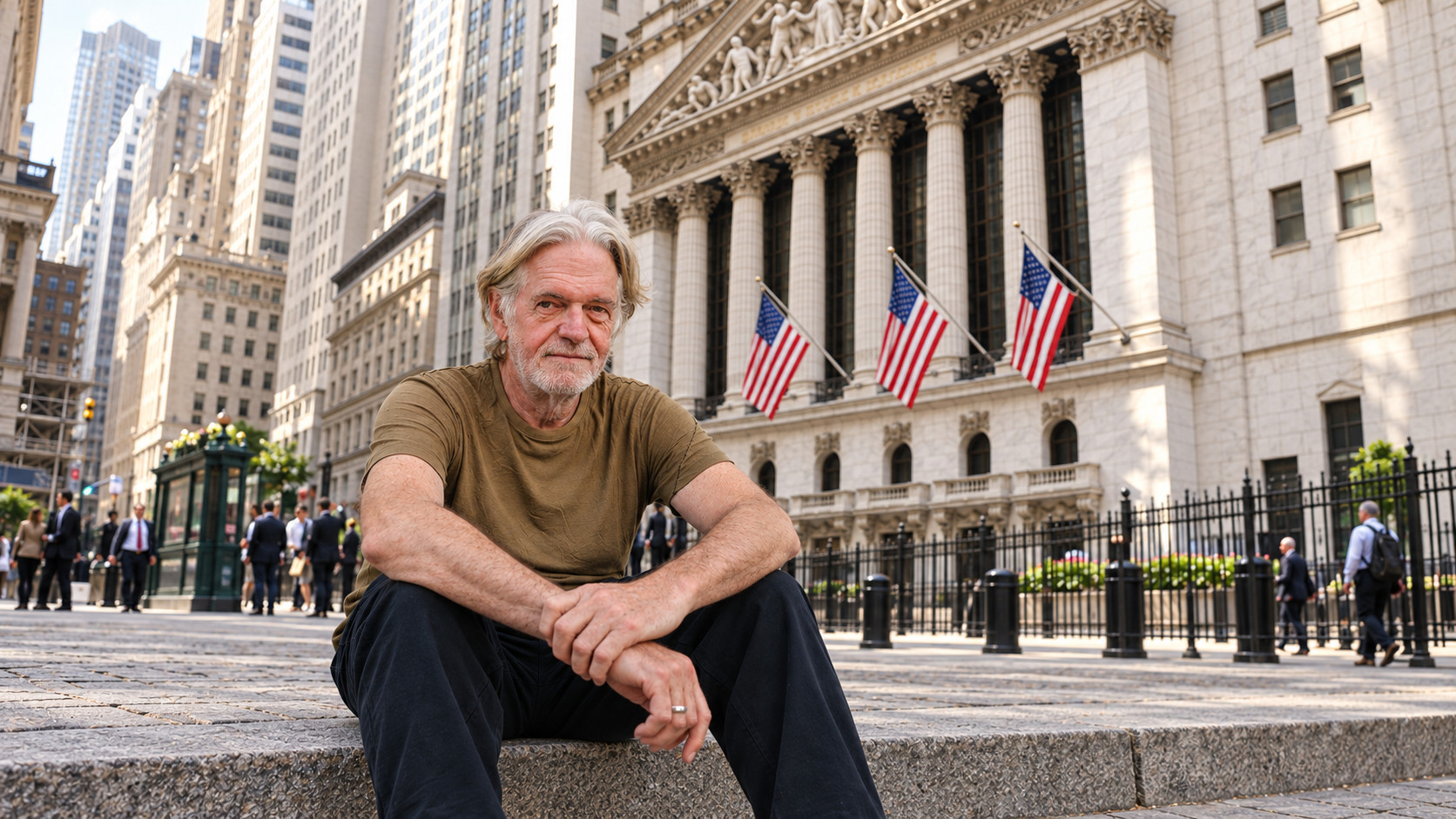
As I wrote on Monday, I invest too. A year ago I bought 10,000 euros’ worth of ETFs. Those are basically a collection of shares around a particular theme or in a particular market. You can choose which region you want, for example the US, Asia or Europe. What kind of shares, tech, healthcare or the arms industry. And whether the shares are ESG or not.
ESG stands for Environmental, Social and Governance: the environment, people and society, and how companies are run. Don’t think you’re investing in completely sustainable, responsible and socially minded companies, but let’s say it’s in the right direction.
With that 10,000 euros I made almost 5,000 euros in a year. Just like that, without lifting a finger, because my friend (who knows about these things) explained that if you want to trade you also need to know what you’re doing, which I don’t. And in fact it was just a very good year I started my investing.
Understandable that people invest their savings and don’t worry about the system behind it. People who haven’t saved are losers, they think.
Okay, so what’s wrong with the financial market? Right now something is happening that has happened many times over the past hundred years. The value of shares, this time in AI, keeps going up and up. Companies making losses can have a paper value of many billions, while they don’t even have business assets (machinery, real estate, inventory) worth anything close to that. A bubble that, strictly speaking, only arises from the sentiment of major shareholders, with clueless small investors like me just tagging along.
But then those stock market people suddenly get a feeling. Yes, a feeling with immense consequences. The market crashes. Bang, the stock indexes drop 30% because it was a bubble. Small investors, sometimes gambling on the market with borrowed money, get hit hard because of course they are too late to act on the feeling those fast operators had. Big and clever investors think, the price will go back up.
But what happens in society? There is an economic crisis worldwide. In wealthy countries businesses start investing less, so unemployment rises, consumers are afraid and keep their money in their pockets, making things even harder for businesses, bankruptcies, layoffs. The government gets less revenue, so cuts the budget for social services. And all because of a feeling
that first starts a bubble and then ignites a crisis.
In poor countries it’s even worse. There the money, the local currency, loses its value. Foreign investors think it’s too risky to invest in those countries. Unemployment rises very quickly, fewer exports, fewer tourists and less money coming in from relatives working in the West. In other words, more poverty, malnutrition and children leaving school to work at home. All mainly because of that fucking feeling a few thousand people have.
A hundred years from now this no longer exists. Money will move around differently. Fairer. In a way that gives ownership to people who earn it. Not just through hard physical or mental work from nine to five, but also through creativity and entrepreneurial talents.
The Italian philosopher Antonio Negri thought it all through together with the American theorist Michael Hardt. Their central point is that creating value does not necessarily give you a right to the proceeds. In their philosophy value should come from a shared effort. A company cannot function without the things that happen outside it. In our present world ownership determines who decides what happens to that property and who can claim the income. Whether it’s land, business assets or knowledge, whoever pays calls the shots. Power in the world is in the hands of governments and big companies. They sometimes work together, sometimes clash, and depend on each other. There is no secret board of directors running this invisible system that they call The Empire.
In their books Hardt and Negri look for a counterweight to that power that is just as broad as “the empire” itself. One in which people can act together while keeping their own beliefs and interests.
Take a river as an example. A farmer wants clean irrigation water. A business owner needs a reliable supply of water for production. People along the riverbanks want safe drinking water and environmental organizations want to secure the ecosystem. They don’t have to agree about political preference, migration or religion to work together to keep that river healthy. They do need a shared structure to deal with any conflicting interests. The outcome won’t be Of the rule of the majority, but according to the most sensible.
Hardt and Negri aren’t necessarily against leaders, they want to turn the usual relationship around: the participants decide the overall direction; those who have to carry it out (government, businesses, individuals) get clearly defined tasks. Expertise is still needed, but doesn’t automatically give someone the right to set the goals for everyone else too.
Back to my attempts to become an investor. Through my ETFs I indirectly own a tiny little bit of more than two thousand companies (I haven’t counted them, mind you). I have no idea who works in those companies or where. Because I mainly invest in ESG, I can assume they are reasonably paid and treated. But as a shareholder I am entitled to a share of the profits they make through their work. Simply because I had the money to buy those shares. That employee may have been there for twenty years, knowing everything about the company, having made his whole existence depend on it. But he has little say. That is where things fundamentally need to change, according to Negri.
And I don’t see how this can fail to change on its own in the not-so-near future.