#76 – ABOUT THE LITTLE THINGS
In 2125, my grandson will be a few weeks short of a hundred. I dedicated my book The Only Possible Solution to him. Because that is what I desperately hope. That he can reach that age, in a world where people live peacefully, with each other and with the earth they walk on.
I have bought an annual pass to the zoo in my hometown. So I can look at the animals with this little human being. Against my principles, really, because I think animals belong in the wild and here they are all locked up. But it is not so bad. There is a lot about programmes to give endangered species another chance.
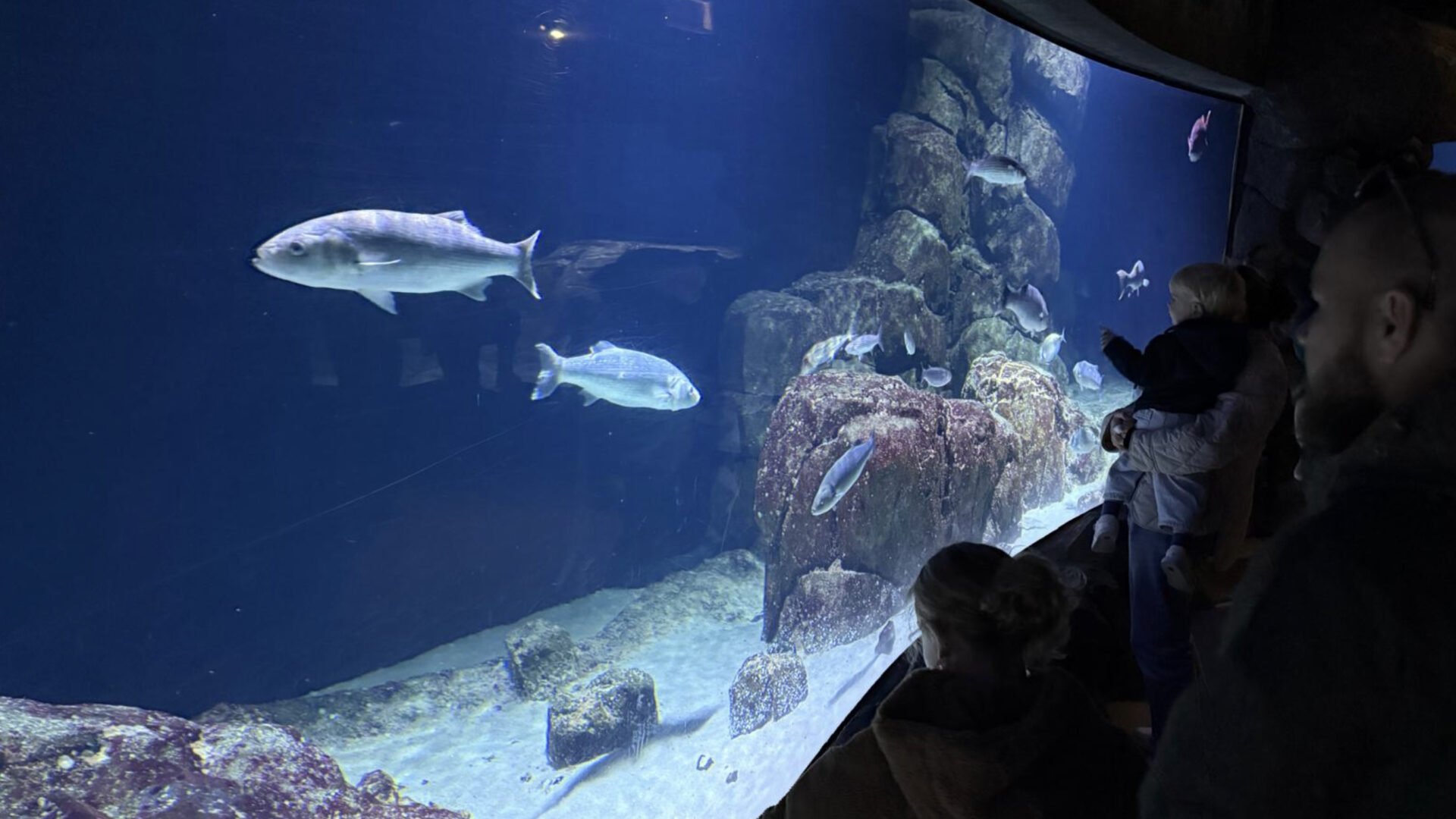
I go to the aquarium. Crazy too, I thought at first, but actually the fish are better off here than in the sea or ocean. My grandson watches the fish. I watch him watching the fish. Extraordinary, I had not expected a child, not even a year old, to look so amazed at the sharks and seals swimming past. Behind that glass is a world he knows nothing about yet. I do. I know just how threatened all those fish fillets are. Threatened by the plastic we dump, the chemicals we discharge, the oil spills, the overfishing, but above all by humanity’s uncontrolled hunger. Not for fish, no, for money.
We donate to Sea Shepherd. A large organisation of tough activists who sometimes even risk their lives to protect the oceans. Now they are heading out to protect krill. You may only have come across that name when buying omega-3 supplements at the drugstore. (Stop buying those, the algae ones are just as good.) Krill are among the smaller living creatures in the ocean. A sort of miniature shrimp. Why would you protect them. Whales probably capture the imagination more. With krill you need a magnifying glass to discover they have little eyes and a little mouth too. They are little shrimp-like animals that swarm through the ocean in huge swarms. Food for whales, penguins, seals. Which makes them essential to the food chain. If the krill disappears, countless fish are in trouble.
They catch them in massive quantities to use as cheap food for farmed fish and in supplements. So we take food from places where wild animals live to feed fish somewhere else that we then eat. There are ships in between, factories, packaging, quality labels and people who can explain why it is all perfectly acceptable. But the whole thing makes no sense if we end up wrecking the natural balance in the ocean.
In Hobart, the capital of the Australian state of Tasmania, 26 countries and the European Union are negotiating the protection of marine life around Antarctica. They decide how much krill can be caught and where. Sea Shepherd warns that the fishing boats gather in the very places where whales and penguins find their food. The organisation is against raising the catch limit, which is what the krill industry wants. They are of course lobbying hard there in Hobart with the governments that decide on this.
It is hard to keep looking at this in a wider context. You start with a little animal and end up talking about fishing, climate, international politics and what is in your shopping basket.All the problems are connected. We cut them apart and put them in all sorts of different boxes (and ministries).
My grandson has no trouble with any of that yet. He is watching something move. I am an optimist. And try to imagine what he will see a hundred years from now. Will there still be sharks and seals swimming around, or will you still have to go to an aquarium to see them?
Thanks to researchers with ingenious trackers, we can see more and more precisely where animals live and look for food. Satellites, underwater robots and countless researchers are constantly working on that. But then someone has to decide that certain parts of the ocean and sea are off limits. Even if those are precisely the places where there is plenty to catch and plenty of money to be made.
We could start by establishing what needs to stay in the sea before calculating what we can take out. And by making public what we feed farmed fish. Because krill is probably the healthiest thing those animals get.
I think organisations like Sea Shepherd make the difference. The difference between a future for my grandson and a whole lot of misery.
As I stand there brooding in front of the glass while a shark gives me a vacant look, I notice my grandson
again and how he watches all those floating creatures behind the glass in wonder. He can still be so wonderfully amazed by the beauty of life underwater.
Later he will have the understanding to make choices too. A generation that will really have to fight to survive.