#58 Nepal: who should pay for the damage?.
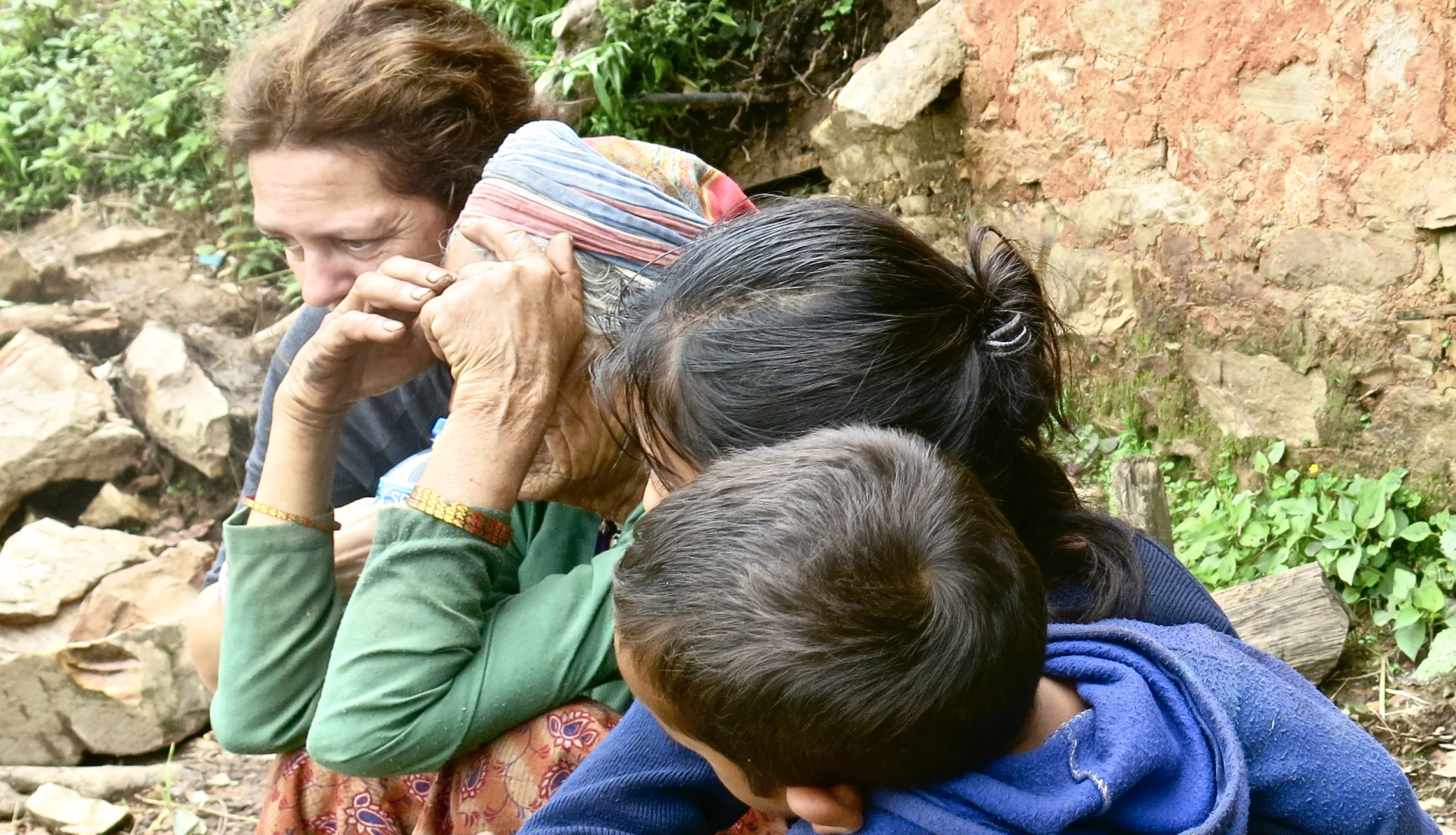
I will never get this image out of my mind. My wife Jacqui comforting a Nepalese mother sitting at the top of what had become a mudslide. It was in the Far West, the part of Nepal bordering India. Through her sobs she told us about the village that had once been somewhere down there and had been swept away by the mud. Her entire family was buried underneath it. There were no bulldozers or rescue services. No, the avalanche of mud and rocks, tens of meters thick, had become the grave of her loved ones. A mass grave.
This week I could almost watch such an event happen live. A violence of nature that is almost impossible to comprehend. Three- and four-story houses swept away like cardboard boxes. People desperately trying to run and being crushed by the torrent. Quick, transfer some money to a relief fund to get rid of the worst of the guilt.
Guilt?
Yes. My second home country, Spain, has hit the nail on the head. Today it is proposing a permanent European fund for climate disasters, paid for, among other things, by a levy on the profits of oil and gas companies and on private jets. There should also be a permanent European rapid intervention force for wildfires and other climate disasters. Spain is not alone. Germany, Austria, Italy, Poland and Portugal have also backed the call for an EU-wide levy on oil and gas companies.
Nepal is one of the poorest countries in the world. Very little industry, very few cars per capita, a tiny aviation sector, in short, very little CO2 emissions. And a country that has contributed so little to global warming is now being hit by some of its worst climate-related disasters. With experts warning that this is probably only the beginning.
The idea of such a fund is, of course, a brilliant idea from Sánchez. But it is also only treating the symptoms. You don’t fight climate change by raising money to provide relief after disasters. You have to tackle it at its core. And perhaps Sánchez is making a start by taking some of the profits from the biggest polluters. Although they may simply pass the bill back to us through the price of gasoline and heating oil.
When people in the year 2125 look back at all the fumbling by business and politics in our time, they will not understand why it took us so long to see the obvious. Not only when it comes to climate change, but also the extraordinary inequality between the polluters – us – and the victims – Nepal and countries like it. Perhaps we have been did ask the wrong question all the time. Not who should pay for the damage afterwards, but why we make the things causing that damage so cheap in the first place.
Today we tax labor. I suspect that will eventually disappear. Because it makes more sense to tax products. The economic activity contributing to global warming today may well have paid some taxes, but the price of the product does not include anything close to all the damage it causes later. A barrel of oil has a market price, but that price does not neatly include your share of future wildfires, failed harvests, coastal defenses, heat problems or biodiversity loss.
There is little point in sitting here pointing fingers at oil companies, and in their slipstream car manufacturers, pharmaceutical companies and basically everyone else who uses fossil fuels. We need to move towards a tax system that taxes what we don’t want instead of taxing what we do want.
Back From The Future is a series of short stories in which I look back from the year 2125 at the world we are creating today.