#81 – WHO OWNS WHOM?
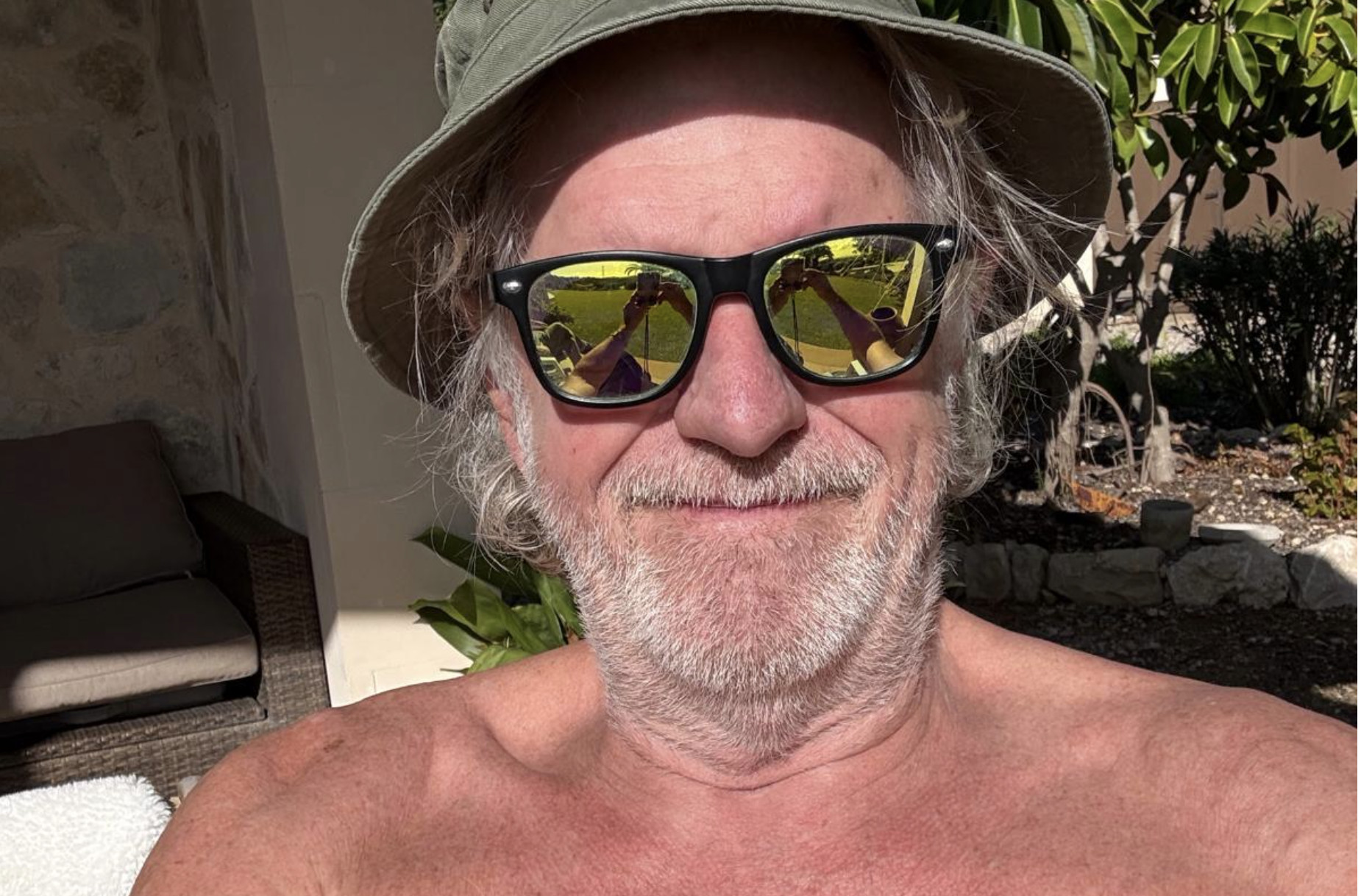
I’ve left France. Back on my island. Sometimes I secretly think I’m happy about climate change. Mid-November, sitting in the sunshine, shirt off. But my head is still in France. The debts. The IMF. Last night I dreamed about my first experience as a war journalist. Mid-May 1978. It was pure coincidence: we’d come to Peru for a completely different reason, but a full-scale uprising was already underway. The cause. A commission led by Dutch politician Wim Duisenberg had investigated the Peruvian economy and recommended drastic reforms. Peru was negotiating with the IMF for new loans. To qualify, the government had to make serious cuts in subsidies on food and fuel. The price of bread was doubled by the dictator in charge, Morales Bermúdez. Like other basic necessities, prices rose by as much as 120%.
The population rose en masse. I was walking with my photographer on the army’s side, but we were chased away. I had to make a detour and ended up on the people’s side. Then the shooting started. Dozens of people who only had stones to throw at the soldiers were mowed down by machine-gun fire.
That’s why the IMF letters still leave a nasty taste in my mouth. It was one of my first confrontations with the power of the international financial system. Fifty years later, there is still something fundamentally wrong with that system.
On Monday I wrote about France and its almost 3.6 trillion euros in national debt. On the other hand, the French population owns an enormous amount of wealth. Households alone have a net worth of more than 15 trillion euros.
So the problem isn’t that France as a society is poor. The problem is, among other things, how money, property, taxes, and obligations are distributed.
In developing countries, it’s a different problem.
First, there is much less wealth, but there is also no broad, wealthy middle class as in the richest countries. And there is an even more important difference.
France can borrow money on relatively low interest. Many countries in the Global South have to pay much higher rates. Sometimes they borrow in dollars, making their debts even more expensive when their own currency loses value.
And when they can no longer pay, they often have to go knocking on the IMF’s door.
Just like Peru back then. Like Greece. Like so many countries in trouble.
According to the United Nations, developing countries had a combined 35 trillion dollars in government debt in 2025. They had to pay almost a trillion dollars in interest. Just imagine this: in 51 developing countries, with a combined population of 3.7 billion, governments spent more on interest than on healthcare or education.
Really unbelievable. Billions of people living in countries where their governments have to pay more in interest than, for example, the entire healthcare system costs.
And who are these creditors?
Other countries, international institutions, banks, pension funds and private investors. Much of that capital is managed in the richer parts of the world.
The economist Jason Hickel has an interesting theory about this. He believes the solution is for developing countries to take a critical look at how their debts came about. Unjust debts should be cancelled. Debts on which developing countries have been paying enormous amounts of interest for years, while the original debt hardly gets any smaller or even keeps growing. Or debts once taken out by corrupt dictators.
Hickel wants more. If one country refuses to pay its debts, it can be financially isolated. If dozens of countries do it at the same time, they suddenly have much more power.
And then they need to become less dependent on the West. Trade more with each other, develop their own payment systems, and democratise the IMF and the World Bank. Or replace them if that doesn’t work.
That sounds pretty revolutionary. And it is.
Hahaha, the creditors will be pretty pissed off. They’ll lose their money and won’t want to lend any more. But that’s exactly the problem. Because that’s how those creditors keep poor countries in their grip. They can hardly afford not to pay, because tomorrow they might need money again. Hickel wants to turn that power relationship around. Why must poor countries constantly adapt to the demands of rich creditors and not the other way around?
And that brings us to a much bigger question. Why is our world economy actually organised this way?
In my book The Only Possible Solution, I describe a world in 2125 where we’ve organised the economy in a completely different way. Endless growth and the power of capital are no longer the most important things. What matters is the question of what people really need.
Food. Water. Shelter. Healthcare. Education. A meaningful existence.
We need to start with a different way of financing new investments, where countries don’t first have to become dependent on foreign creditors to give their people a future.
Maybe that ‘foreign’ shouldn’t even exist anymore. Away with all those borders. For fuck’s sake, we live in one world, on one planet.
Hickel wants to start with a debtors’ club. Countries that together refuse to let their creditors dictate the rules any longer. Of course, that’s not a new world economy yet. But it might just be a first step.
Because as long as the countries that need the money have to adapt to the countries that own the money, nothing fundamentally changes.
And me? I turned 74 this week.
And for now, I’ll just keep on working.
To make that other world a reality.