#53 – The church comes back to earth
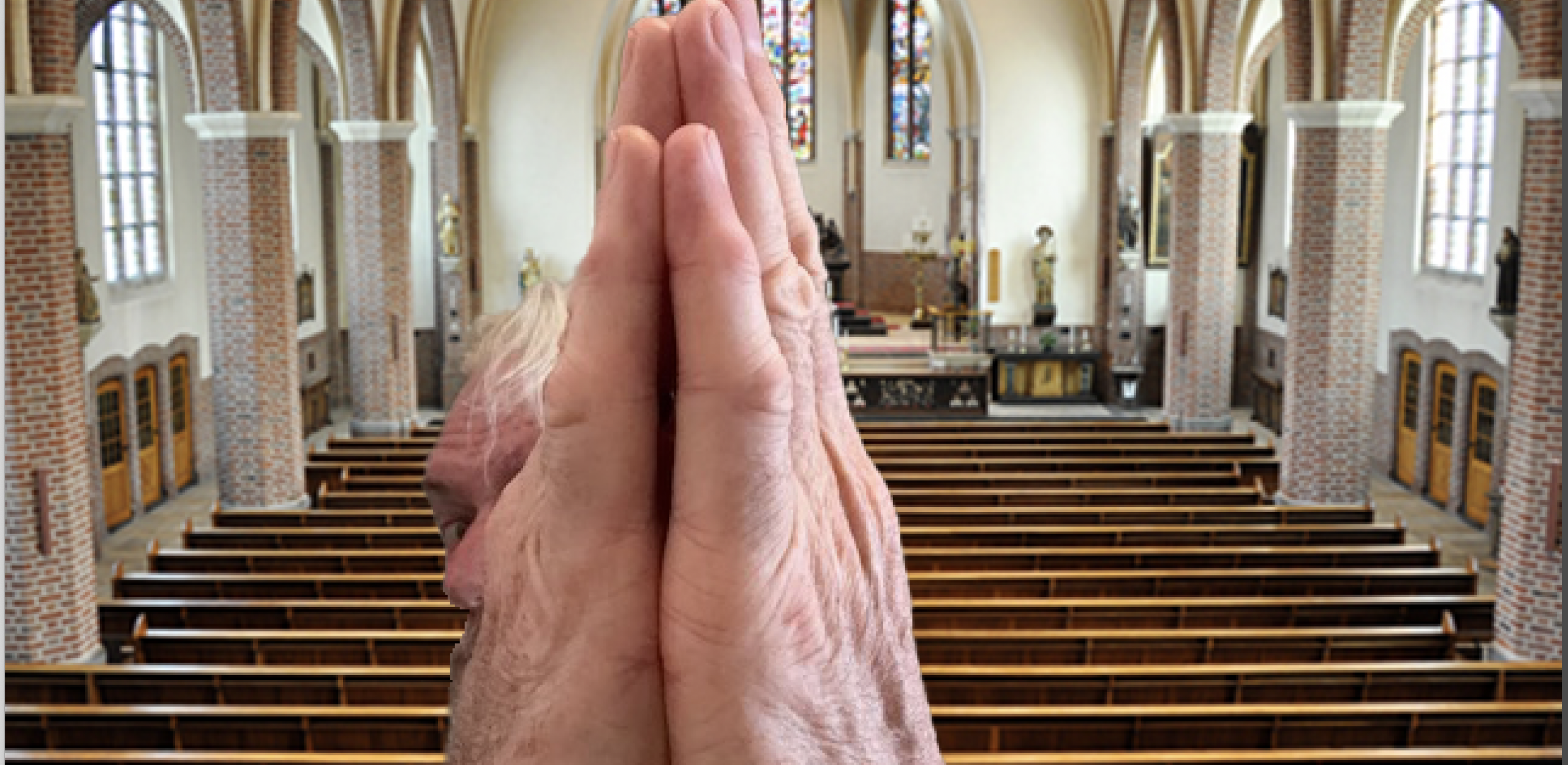
At seventeen, I was excommunicated by the priest of our parish. I was no longer allowed to call myself a Catholic. This was because I had staged a protest during Midnight Mass. Together with my friends, I held a hunger strike outside the church to draw attention to world hunger.
Later, I also protested against Pope John Paul II. As a reporter, I regularly stayed with the guerrillas in El Salvador. I interviewed Archbishop Óscar Romero, who was, shortly after, shot dead on March 24, 1980, while celebrating Mass. His killer came from circles close to the government-backed death squads.
Six days later, I attended his funeral. The gunfire, the panic, and the people trampled in the square outside the cathedral revealed the terror that the army and the fourteen wealthy families who controlled the country were inflicting on the population.
John Paul II was so afraid of Marxism that he warned priests above all not to identify themselves with the guerrillas or the political struggle. Church buildings were no longer to be used as refuges—not only for fighters, but also for civilians. The Church officially took no side, although in El Salvador silence almost automatically meant helping the most powerful side.
With Pope Francis, my Catholic genes began acting up again. Not only because of his simple way of life, but also because of his struggle against conservatism within the Church. As an Argentine, he had been shaped by a country that had lived through a military dictatorship. He looked at state violence, poverty, inequality, and an economic system that excludes people. He distrusted Marxism too, but believed that the Church should stand unconditionally beside the poor, migrants, and victims.
One of his final projects is now becoming a reality. Saturday Reuters announced news about an agrivoltaic power plant is being built on land owned by the Holy See outside Rome, where the enormous Vatican Radio transmission towers have stood since 1957. At 424 hectares, the site is almost ten times the size of Vatican City itself. Solar panels will be installed above part of the farmland, high enough for the land beneath them to remain in agricultural use. The panels provide shade, reduce evaporation, and protect crops from extreme weather. That is the new challenge facing agriculture: learning how to grow crops in the shade, away from the increasingly fierce summer sun.
According to initial estimates, the installation will have a capacity of 80 to 90 megawatts and cost around €100 million. It could make the smallest country in the world entirely self-sufficient in electricity.
While writing the chapter on spirituality in The Only Possible Solution, I discovered that 84 percent of humanity still follows some form of religion. Religion has often been used to control people and preserve power structures. But that cannot be the whole story. People search for meaning, wonder, and a connection with something larger than themselves.
You do not have to return to church to find it. You can also experience that connection through meditation, music, a genuine conversation, or nature: watching birds, following bees, listening to the rain, or marveling at a tomato seed breaking through the soil. Churches may survive if they learn to serve that need without once again trying to decide what people should believe.
In 2125, religion and spirituality probably have not disappeared. But their place in society has changed. Churches may have less power and more meaning. And perhaps we remember Francis as the pope who understood that caring for the soul cannot be separated from caring for the Earth.
His successor, Leo XIV, warned last friday that AI could become a new form of economic colonialism: poor countries provide the data, raw materials, and cheap labor, while a handful of wealthy countries and companies own the technology. He may not turn out to be as progressive as Francis. But it is not a bad beginning.
Who knows? After two thousand years, the Church and society may finally develop a healthy relationship.
Back From The Future is a series of short stories in which I look back from the year 2125 at the world we are creating today.